
Problem Gambling Prevention 101
What problem gambling prevention information can you share to help individuals, families, and communities make informed choices and prevent gambling related harms?
What training, technical assistance, resources, and events can help strengthen your community’s problem gambling prevention efforts?
What problem gambling prevention information can you share to help individuals, families, and communities make informed choices and prevent gambling related harms?
What training, technical assistance, resources, and events can help strengthen your community’s problem gambling prevention efforts?
Course Information
- Audience:
Public health professionals, Community health workers, Social workers, Behavioral health professionals, Prevention specialists, Educators and school counselors, Healthcare providers (e.g., nurses, primary care physicians), Nonprofit and community organization staff, Policy makers, Substance use prevention professionals
- Format: Webinar
- Date/Time: November 12th, 2026 12:00 PM – 1:00 PM ET.
- Price: Free
- Length: 1 hour
- Credential(s) eligible for contact
If you are not seeking a CHES/MCHES contact hours, if you complete the post-test and evaluation, you will receive a Certificate of Completion. The Certificate will include the length of the course. NEPHTC is a designated provider of continuing education contact hours (CECH) in health education by the National Commission for Health Education Credentialing, Inc. This program is designated for Certified Health Education Specialists (CHES) and/or Master Certified Health Education Specialists (MCHES) to receive up to 1 total Category I continuing education contact hours. Maximum advanced-level continuing education contact hours are 1.
-
Provider ID:
-
Event ID:
-
Competencies: Community Dimensions of Practice Skills
-
Learning Level: Awareness
-
Companion Trainings:
-
Supplemental materials: None
-
Pre-requisites: None
About this Webinar
As gambling becomes more accessible, communities need to understand the issue and how to prevent gambling related harms. This webinar will provide an overview of problem gambling, how the Massachusetts Center of Excellence on Problem Gambling Prevention supports communities through capacity-building services, and an overview of the training and technical assistance services available to any Massachusetts community looking to address this important issue. Anyone involved in problem gambling prevention, prevention, or public health is welcome to attend.
Learning Objectives
-
Define gambling
-
Describe the gambling continuum
-
Identify risk and protective factors for problem gambling
-
Describe what Technical Assistance is
-
Locate the MCOE PGP's resources and events and understand how to request training or technical assistance
Subject Matter Expert(s)
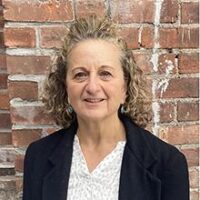 Jacqueline Dick
 is a public health and wellness expert who brings over 30 years of experience leading and advancing community collaboration and grant-funded initiatives. She brings extensive expertise as a program manager, health educator, wellness coach, and tenured professor and has led programs at the federal and state levels. She is adept in utilizing and adapting learning management systems to accommodate diverse learning styles. As director of EDC’s Massachusetts Center of Excellence on Problem Gambling Prevention, Ms. Dick leads a team in providing high-quality and culturally responsive capacity building, training, and education to address problem gambling and related behavioral health issues. Previously, Ms. Dick was a program leader and tenured faculty for Northern Essex Community College’s Public Health Program and has extensive experience in program design and community health worker trainings. Additionally, she served on the advisory board for the Academic Public Health Corps of Massachusetts. Ms. Dick holds an MS from the Indiana University School of Public Health and a BA in Human Movement Studies from the Carnegie College of Human Movement in Leeds England
 Ben Spooner
 is the associate project director of EDC’s Massachusetts Center of Excellence on Problem Gambling Prevention, where he supports state-wide efforts to prevent underage and problem sports betting. He specializes in providing training and developing tools that build the capacity of prevention professionals in key areas such as problem gambling and substance misuse prevention. Ben is an experienced project manager and training and technical assistance (TTA) provider. He brings extensive expertise in problem gambling prevention, substance misuse prevention, communications planning, sustainability and strategic planning, and instructional design to his work at MCOEPGP. He frequently presents on upstream prevention at national and regional conferences.
Enrollment and Contact Hours
Select the Enroll button below to register for the course. If you have any trouble accessing the course, contact support@nephtc.org.
Acknowledgement: This project is supported by the Health Resources and Services Administration (HRSA) of the U.S. Department of Health and Human Services (HHS) as part of award 2 UB6HP31685‐05‐00 “Public Health Training Centers.” The contents are those of the author(s) and do not necessarily represent the official views of, nor an endorsement, by HRSA, HHS or the U.S. Government.This training was supported by the Health Resources and Services Administration (HRSA) of the U.S. Department of Health and Human Services (HHS) as part of a financial assistance award totaling $400,000 with 100% funded by HRSA/HHS and 0% funded by nongovernment source(s). The contents are those of the author(s) and do not necessarily represent the official views of, nor an endorsement, by HRSA/HHS, or the U.S. Government.
* Yale School of Public Health, Office of Public Health Practice, a New England Public Health Training Center partner, is a designated provider of continuing education contact hours (CECH) in health education by the National Commission for Health Education Credentialing, Inc. All CHES credit inquiries are managed by YSPH
Registration
Select the Enroll Me button below to register for this recording. If you have any trouble accessing the recording, contact support@nephtc.org.
Acknowledgement: This project is supported by the Health Resources and Services Administration (HRSA) of the U.S. Department of Health and Human Services (HHS) as part of award 2 UB6HP31685‐05‐00 “Public Health Training Centers.” The contents are those of the author(s) and do not necessarily represent the official views of, nor an endorsement, by HRSA, HHS or the U.S. Government.