
988 Maine: The Front Door of a Community-based Crisis
System
How is 988 transforming Maine’s behavioral
health crisis response—and what can public health professionals learn from
Maine’s experience to strengthen community-based crisis care in their own work?

Course Information
- Audience: All public health professionals working in nonprofits, healthcare, educational institutions, government and private sector
- Format: Recorded Webinar
- Date/Time: March 5th, 2026 12:00 PM – 1:00 PM ET.
- Price: Free
- Length: 1 hour
- Credential(s) eligible for contact
If you are not seeking a CHES/MCHES contact hours, if you complete the post-test and evaluation, you will receive a Certificate of Completion. The Certificate will include the length of the course. NEPHTC is a designated provider of continuing education contact hours (CECH) in health education by the National Commission for Health Education Credentialing, Inc. This program is designated for Certified Health Education Specialists (CHES) and/or Master Certified Health Education Specialists (MCHES) to receive up to 1 total Category I continuing education contact hours. Maximum advanced-level continuing education contact hours are 1.
-
Provider ID:
-
Event ID:
-
Competencies: Community Dimensions of Practice Skills
-
Learning Level: Awareness
-
Companion Trainings: None
-
Supplemental materials: None
-
Pre-requisites: None
About this Webinar
The launch of the 988 Suicide & Crisis Lifeline in July 2022 was a pivotal moment for mental health and substance use crisis response in Maine. In 2024, Maine’s crisis hotlines answered about 150,000 calls/chats/texts, and 988 has been a catalyst for the expansion and enhancement of the state's broader crisis system. This panel presentation explores how the 988 service works in Maine, how 988 is driving critical national and statewide reform, and how the crisis hotline service is fostering a more accessible continuum of care for all Mainers experiencing behavioral health crises. This panel brings together partners responsible for establishing 988 in Maine. It will share about the immediate impacts of 988, such as increased access to skilled crisis support and diversion of mental health calls from engagement with law enforcement. It will also demonstrate how the sustained investment and evolving infrastructure around 988 and mobile crisis response are propelling the development of a robust statewide crisis response system. Attendees will gain valuable insights into the current landscape and future vision of Maine's behavioral health crisis system, with a focus on data demonstrating the role in fostering community-based care. Maine's journey with 988 offers a compelling case study for public health professionals dedicated to improving mental well-being and strengthening community-based care.
Learning Objectives
-
Identify the services provided by, and relationships between the components of the Maine Behavioral Health Crisis System, including the 988 Suicide & Crisis Lifeline.
-
Describe how Maine's 988 service has enhanced the accessibility of crisis services, particularly with regard to diversion of behavioral health crises away from unnecessary contact with law enforcement and hospital settings.
Subject Matter Expert(s)
 Christina Cook, MSW, The Opportunity Alliance: Maine Crisis Line/988
Christina Cook is the Director of the Maine Crisis Line/988 (MCL/988) at The Opportunity Alliance in Portland, ME. She earned her undergraduate degree in Business Psychology from the University of Maine at Farmington and her graduate degree in Social Work from the University of Southern Maine. Throughout her career, Christina has worked with individuals in both community and residential settings, supporting programs that serve people experiencing homelessness, high-risk substance use, and suicidal crises. Before her current role at MCL/988, Christina served as a Clinical Manager of a PNMI program and as a supervisor for the Project for Assistance in Transition from Homelessness (PATH). She is passionate about building systems of care that are accessible to all and truly meet the needs of individuals in crisis.
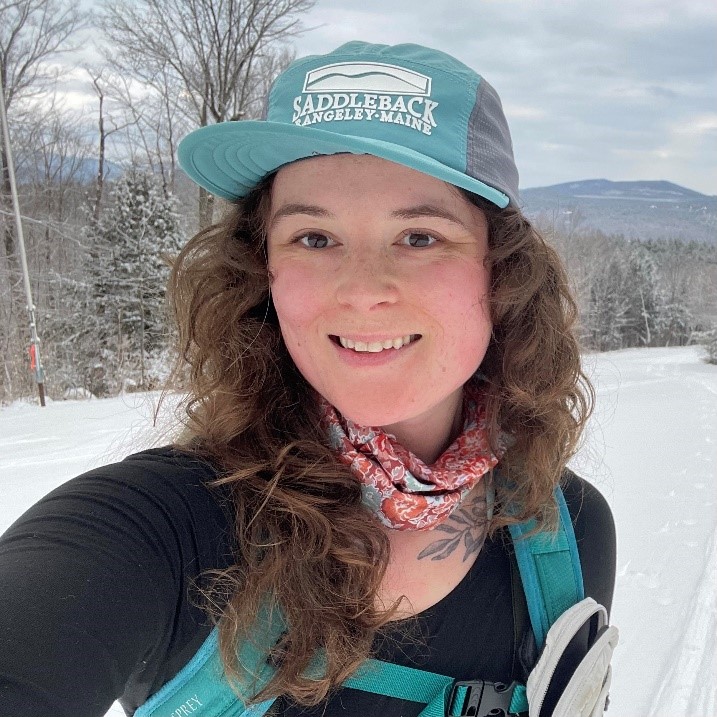 Harley High, The Opportunity Alliance: Maine Crisis Line/988
Harley High is the 988 Coordinator, Maine Crisis Line/988 (MCL/988) at The Opportunity Alliance in Portland, ME. Harley works to strengthen partnerships with national and state organizations to enhance outreach, engagement, and operations for the MCl/988. Drawing on frontline experience, Harley contributes to quality assurance processes and supports training for new staff to ensure best practices in crisis intervention. Harley also assists with key projects such as reaccreditation preparation and organizes awareness initiatives, including 988 Day activities. Passionate about mental health advocacy, Harley is dedicated to improving access to compassionate, effective care for individuals in crisis.
 Abby Bridgers, MPS, Maine DHHS: Office of Behavioral Health
Abby Bridgers is a data analyst and program evaluator at the Maine Department of Health and Human Services, Office of Behavioral Health. She holds a bachelor’s degree in politics from Mount Holyoke College and a master’s degree in analytics from Northeastern University’s Roux Institute. Abby has health data experience spanning health policy, industry consulting, and clinical settings. In her current role, she analyzes and presents data for state and federal audiences to support crisis system monitoring and reform efforts.
 Brooke Pochee-Smith, Maine DHHS: Office of Behavioral Health
Brooke Pochee-Smith is an experienced public health and systems change professional with deep experience spanning healthcare, government policy and planning, community organizing, and organizational leadership. She currently serves as Project Director for Maine’s 988 and Crisis System Reform at the Maine Department of Health and Human Services, where she leads the statewide implementation of the 988 Suicide & Crisis Lifeline, manages multi-sector collaborations, and supports broad access to behavioral health crisis services across Maine. Holding a Master of Public Health and a Master of International and Intercultural Management, Ms. Pochee-Smith brings a multidisciplinary approach to public health policy, evaluation, and community engagement, with experience in program evaluation, international public health research, and systems change initiatives in both higher education and government.
Enrollment and Contact Hours
Select the Enroll button below to register for the course. If you have any trouble accessing the course, contact support@nephtc.org.
Acknowledgement: This project is supported by the Health Resources and Services Administration (HRSA) of the U.S. Department of Health and Human Services (HHS) as part of award 2 UB6HP31685‐05‐00 “Public Health Training Centers.” The contents are those of the author(s) and do not necessarily represent the official views of, nor an endorsement, by HRSA, HHS or the U.S. Government.This training was supported by the Health Resources and Services Administration (HRSA) of the U.S. Department of Health and Human Services (HHS) as part of a financial assistance award totaling $400,000 with 100% funded by HRSA/HHS and 0% funded by nongovernment source(s). The contents are those of the author(s) and do not necessarily represent the official views of, nor an endorsement, by HRSA/HHS, or the U.S. Government.
* Yale School of Public Health, Office of Public Health Practice, a New England Public Health Training Center partner, is a designated provider of continuing education contact hours (CECH) in health education by the National Commission for Health Education Credentialing, Inc. All CHES credit inquiries are managed by YSPH
Registration
Select the Enroll Me button below to register for this recording. If you have any trouble accessing the recording, contact support@nephtc.org.
Acknowledgement: This project is supported by the Health Resources and Services Administration (HRSA) of the U.S. Department of Health and Human Services (HHS) as part of award 2 UB6HP31685‐05‐00 “Public Health Training Centers.” The contents are those of the author(s) and do not necessarily represent the official views of, nor an endorsement, by HRSA, HHS or the U.S. Government.