


From Neighbor-to-Neighbor Connections to Technology in the Home: Dementia Inclusive Communities
What if a dementia diagnosis did not have to mean losing your place in the community?
What if a dementia diagnosis did not have to mean losing your place in the community?
Course Information
- Audience:
Public health professionals, Community health workers, Social workers
- Format: Webinar
- Date/Time: December 3rd, 2026 12:00 PM – 1:00 PM ET.
- Price: Free
- Length: 1 hour
- Credential(s) eligible for contact
If you are not seeking a CHES/MCHES contact hours, if you complete the post-test and evaluation, you will receive a Certificate of Completion. The Certificate will include the length of the course. NEPHTC is a designated provider of continuing education contact hours (CECH) in health education by the National Commission for Health Education Credentialing, Inc. This program is designated for Certified Health Education Specialists (CHES) and/or Master Certified Health Education Specialists (MCHES) to receive up to 1 total Category I continuing education contact hours. Maximum advanced-level continuing education contact hours are 1.
-
Provider ID:
-
Event ID:
-
Competencies: Community Dimensions of Practice Skills
-
Learning Level: Awareness
-
Companion Trainings:
-
Supplemental materials: None
-
Pre-requisites: None
About this Webinar
For the 64% of older Mainers living in rural areas, aging in the communities they love is complicated by the lack of access to resources, services, and social connections that keep people healthy and engaged. People living with dementia face even greater challenges. This webinar highlights two ways volunteers are bridging the gap. The Community Connector project trained 16 volunteers in 12 communities as peer resource navigators. Over 18 months, Connectors linked 1,514 people to services, engaged 813 volunteers, and returned $760,000 to older Mainers through benefit enrollment. The Echo Dot project trained 59 volunteers to install voice-activated home assistants, reaching 602 homes across 45 communities. Two months later, 72% of recipients, including people with dementia, felt confident using the device. We begin with an overview of Maine's age-friendly, dementia-inclusive community movement, then describe the Community Connector and Virtual Home Assistant projects.
Learning Objectives
-
Describe at least three strategies for building dementia-inclusive communities within an existing age-friendly or volunteer-driven framework, using examples from Maine's Community Connector pilot.
-
Identify key facilitators and barriers to technology adoption among older adults living with cognitive changes and explain how a peer volunteer training model can support successful implementation of voice-activated home assistants.
-
Apply a replicable, community-based model for dementia inclusion to their own organizational or community context, identifying at least one opportunity for partnership, program adaptation, or systemic change
Subject Matter Expert(s)
 Patricia Oh, PhD, MSW, MA, MS
Patricia Oh is Assistant Director of Community Research and Coordinator of Lifelong Maine at the University of Maine Center on Aging. Her work centers on age-friendly and dementia-inclusive community and economic development, volunteering, and technology to support independent living.
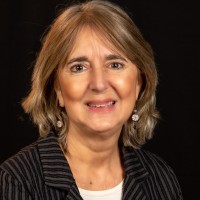 Elizabeth Gattine, JD
, is Senior Policy Analyst and Coordinator of the Governor's Cabinet on Aging at the Governor's Office of Policy Innovation and the Future. She has extensive experience in disability and aging policy, and in the design, implementation, and evaluation of programs for older adults at the national, state, and local level, particularly in the delivery of long-term services and support.
 Darren Smart, MOT, OTR/L
Darren Smart, OT, Founding Director of Technology Helps Me, is an occupational therapist and assistive technology professional with clinical experience in skilled nursing facilities, a neurological rehabilitation hospital, and home health. He is committed to using technology as a tool to improve quality of life for his clients.
Enrollment and Contact Hours
Select the Enroll button below to register for the course. If you have any trouble accessing the course, contact support@nephtc.org.
Acknowledgement: This project is supported by the Health Resources and Services Administration (HRSA) of the U.S. Department of Health and Human Services (HHS) as part of award 2 UB6HP31685‐05‐00 “Public Health Training Centers.” The contents are those of the author(s) and do not necessarily represent the official views of, nor an endorsement, by HRSA, HHS or the U.S. Government.This training was supported by the Health Resources and Services Administration (HRSA) of the U.S. Department of Health and Human Services (HHS) as part of a financial assistance award totaling $400,000 with 100% funded by HRSA/HHS and 0% funded by nongovernment source(s). The contents are those of the author(s) and do not necessarily represent the official views of, nor an endorsement, by HRSA/HHS, or the U.S. Government.
* Yale School of Public Health, Office of Public Health Practice, a New England Public Health Training Center partner, is a designated provider of continuing education contact hours (CECH) in health education by the National Commission for Health Education Credentialing, Inc. All CHES credit inquiries are managed by YSPH
Registration
Select the Enroll Me button below to register for this recording. If you have any trouble accessing the recording, contact support@nephtc.org.
Acknowledgement: This project is supported by the Health Resources and Services Administration (HRSA) of the U.S. Department of Health and Human Services (HHS) as part of award 2 UB6HP31685‐05‐00 “Public Health Training Centers.” The contents are those of the author(s) and do not necessarily represent the official views of, nor an endorsement, by HRSA, HHS or the U.S. Government.